
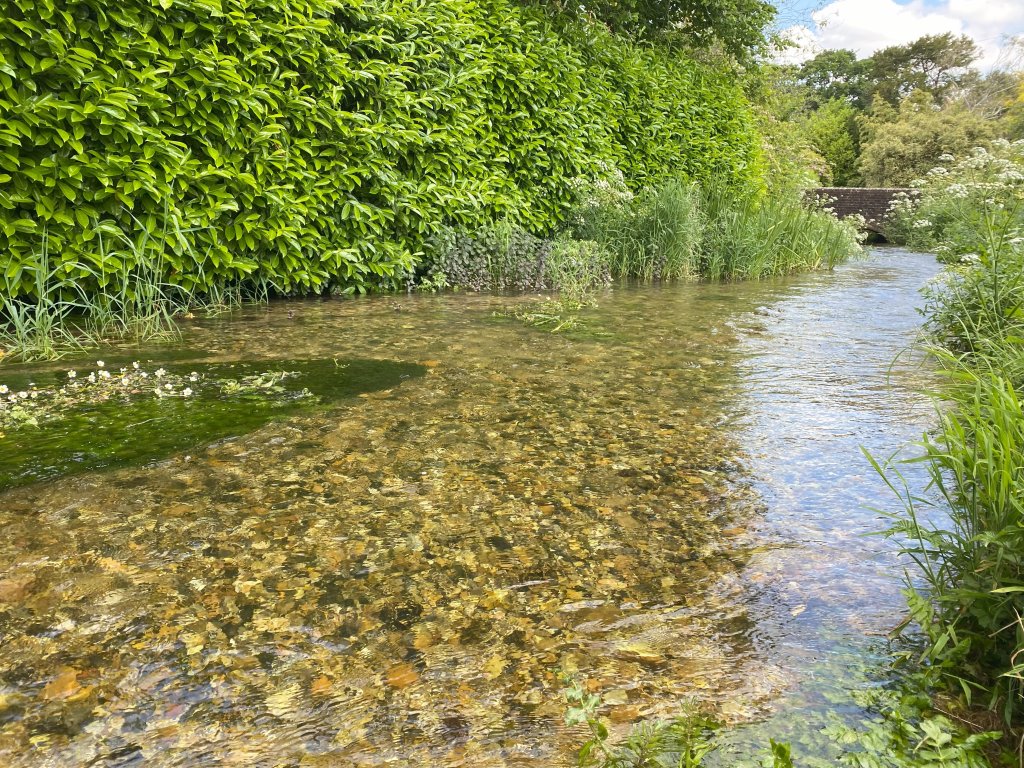
The River Ems, flowing from the South Downs National Park to Emsworth and into Chichester Harbour, is one of the UK's rare and precious chalk rivers. With only around 280 chalk streams in the world - 85% of them in the UK - these ecosystems are internationally significant.
The Ems, nominated as a Flagship Chalk River by Portsmouth Water, supports unique wildlife, clean water, and centuries of local heritage.
But today, the river is under unprecedented pressure.
A River in Crisis
This summer’s drought has revealed just how fragile the River Ems has become. In several locations, including River Street (Westbourne) and Brook Meadow (Emsworth), the river has dwindled to a trickle—or disappeared entirely.
Riverfly monitoring at Brook Meadows and Mill Meadows has shown an alarming collapse in invertebrate populations. In early November, John Barker (landowner) at Mill Meadows found only three tiny early-stage caddis larvae.
John Barker described the scene starkly:
“I usually see thousands of freshwater shrimp in the river. But in recent sampling I haven’t seen any… key groups of organisms were simply missing. Where I would be normally counting dozens of individuals of each type, in this sample there were just three individuals of only one type. It was horrifying.”
This isn’t just drought. It’s a system at breaking point.

Pressure From Abstraction
Portsmouth Water abstracts water from the aquifer that feeds the River Ems to supply homes and businesses. Due to the twin pressures of drought and abstraction, in recent months this has left the river barely flowing, unable to sustain a healthy ecosystem.
Climate change and rapid housebuilding - with potentially over 1,000 new homes expected across Southbourne and the surrounding villages - will increase the pressure further as all these developments will need more water. Without intervention, the Ems risks becoming a “ghost river” every summer.
Ultimately Portsmouth Water’s abstraction licence must be reviewed by the Environment Agency, reducing the allowable abstraction amount to protect what remains of this vital ecosystem. However the river cannot wait for this review and reduction in abstraction.
It is our collective responsibility to act now! The water we use everyday has a huge impact on our rivers. We must all do our bit to save water wherever possible.
With Portsmouth Water also supplying water to Southern - because they are in greater water deficit - it is crucial that Southern Water customers do their bit for chalk streams too. Any water savings made by them will not only benefit the River Ems but also the River Rother as well, as this is the main abstraction point for Southern Water to abstract water for our taps.
Water Stress in the South East
The south east is one of the UK’s most water-stressed regions. Every litre we use at home is a litre that isn’t in our rivers.
Recent Government water resource data shows:
Residents in the Portsmouth Water area use 154 litres per person per day on average
The national average is 137 litres
Portsmouth Water has the lowest proportion of metered households
The company aims to reduce usage to 110 litres per person over 25 years - but significant action is needed to make this achievable.
We all need to do more to be clever with our water use, not only to support our rivers and the wildlife who rely on them, but to safeguard our own water supply (see a recent article by Roger Morgan-Grenville on water scarcity).
Wildlife on the Brink
The River Ems supports an extraordinary range of species - many of them legally protected or critically endangered. These include:
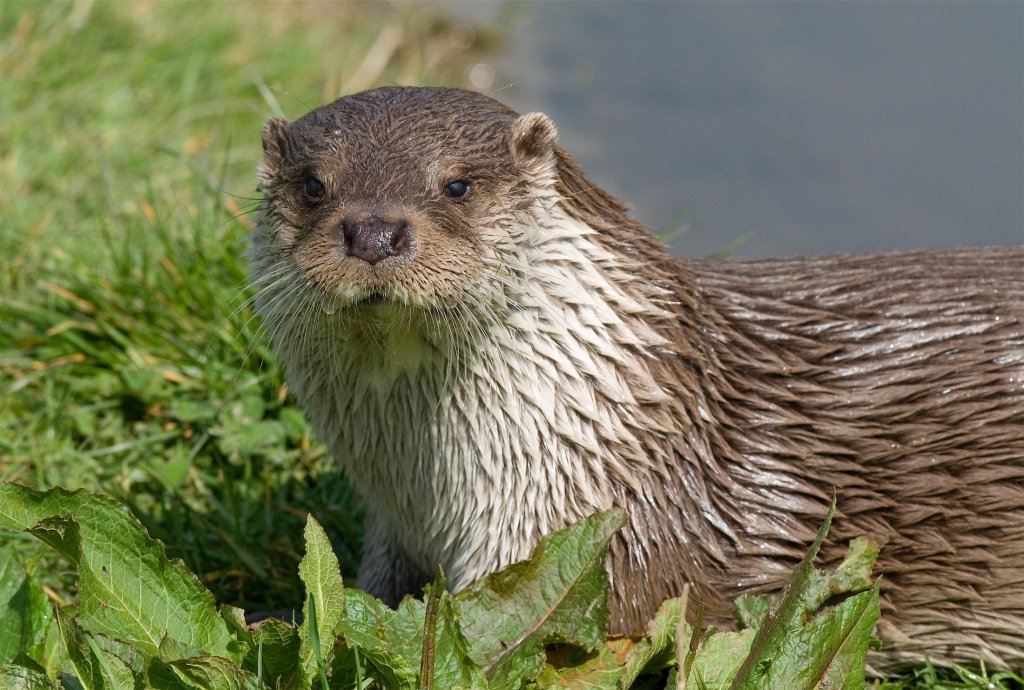
Otter – European Protected Species; Near Threatened globally
Water vole – England’s fastest-declining mammal; listed as Endangered
European eel – Critically Endangered on the IUCN Red List
Bullhead – Protected under the Habitats Directive
Audouinella pygmaea – a rare algae, recorded in England for the first time in the Ems
Multiple bat species – using the river as a vital commuting corridor
With the decimation of the river’s population of invertebrates, the foundation of the river’s food web, fish, birds, and mammals are struggling to survive in the riverscape and will need to move elsewhere to find food and shelter, if they are able to.
Also with less water, pollutants in the river are less diluted meaning the effects of these on wildlife are even more substantial and threatening.
Why Chalk Rivers Matter
Unlike most rivers, chalk streams are fed by underground aquifers that filter water through chalk, producing:
exceptionally clear, clean, mineral-rich water
stable year-round temperatures
habitat for specialist species like water crowfoot, starwort, and brown trout.
Because they are so clean, chalk streams have historically supported mills, breweries, and watercress farming. Once degraded, they can take decades to recover.
What Needs to Happen Now
1. We must all save water!
Our actions help keep water in the river:
Turn off the tap when brushing teeth
Swap baths for short showers
Collect rainwater for plants
Reuse cooking water on the garden
Water gardens in early morning or late evening to reduce evaporation
Collect water whilst you’re waiting for the tap to run hot, and reuse this water
Install water-saving shower heads - especially on monsoon type showers which use an extremely high volume of water
Update appliances to more water-efficient models (e.g. washing machine, dishwasher)
Install grey water harvesting/recycling systems for your home if you can afford to do so (you’ll save lots on your water bill long-term!)
Every litre saved supports the river.
2. Increase Household Water Metering
Metered households typically use 15–20% less water. Portsmouth Water’s work to install smart meters must continue apace, with the urgency needed to safeguard our chalk streams.
3. Collaborate on Catchment Management
Partnership working between Portsmouth Water, Southern Water, WSRT, local councils, and communities is essential. We need shared monitoring, data transparency, and investment in resilience projects to support the river.
4. Reduce Abstraction
The Environment Agency must step in to enforce sustainable abstraction levels. Without water, the River Ems cannot recover.
5. Hold Water Higher in the Catchment
Rainfall in 2023–24 was “exceptionally high” in the Ems hydrological area. Where possible given the underlying chalk geology, better surface water management could retain more water for slow release during the drier months.
A Shared Responsibility
The River Ems is a golden thread linking villages such as Compton, Walderton, West Marden, Stoughton, Aldsworth, and Westbourne together, before flowing through Emsworth into Chichester Harbour - a National Landscape.
Everything we do as individuals within the catchment including agriculture, septic systems, roads, gardens, livestock, even dog flea treatments, has an impact on the chalk aquifer and ultimately the river.
With continued development and rising temperatures, we must act together to protect this uniquely vulnerable river.
The Ems is more than just a river. It is a wildlife corridor, a historical lifeline, a community asset, and one of the planet’s rarest ecosystems.
With collective effort from regulators, water companies, landowners, and residents, we can help restore and protect this precious chalk stream for generations to come.
Keep an eye on our website for details of volunteering opportunities or events to help support the River Ems.
Related evidence:
Figure 1: Observed rainfall between April 2023 and March 2024 compared to probability bandings (by hydrological area) – River Ems Catchment ‘Exceptionally high’ – opportunity to hold water further up the catchment.
Figure 2: Water losses and operational use as a percentage of distribution input (DI) per company in 2023-2024 – Portsmouth Water under the National Average.
Figure 7: Leakage per person at a water company level for 2023-2024 – Portsmouth Water under the National Average.
Figure 8: Leakage as a percentage of distribution input at a water company level for 2023-2024 – Portsmouth Water under the National Average
Figure 11: Average water company per capita consumption reported in 2023-2024 – Portsmouth Water is the highest.
Figure 13: Percentage of households being charged on a metered tariff including void properties, reported by water companies in 2023-2024 – Portsmouth Water is the lowest.